

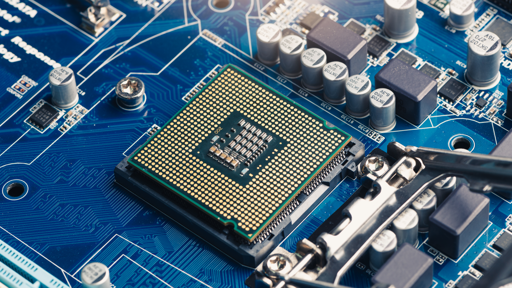
“The new device is built from arrays of resistive random-access memory (RRAM) cells… The team was able to combine the speed of analog computation with the accuracy normally associated with digital processing. Crucially, the chip was manufactured using a commercial production process, meaning it could potentially be mass-produced.”
Article is based on this paper: https://www.nature.com/articles/s41928-025-01477-0
Look, It’s one of those articles again. The bi-monthly “China invents earth-shattering technology breakthrough that we never hear about again.”
“1000x faster?” Learn to lie better. Real technological improvements are almost always incremental, like “10-20% faster, bigger, stronger.” Not 1000 freaking times faster. You lie like a child. Or like Trump.
Here’s a Veritasium video from 3 years ago about an American company making analog chips, explaining why they are so much more efficient in certain tasks. https://youtu.be/GVsUOuSjvcg
It is not an incremental improvement because it’s a radically different approach. This is not like making a new CPU architecture or adding more IPC, it’s doing computation in a whole different way, that is closer to a physical model using springs/gravity/gears/whatever to model something like the Antikythera mechanism or those water-based financial models than any digital computer.
Also, uncritically dismissing anything coming from China as a scam is not being resistant to Chinese propaganda, it’s just falling for the US’.
Yep! It’s a modal difference. Analogous to dismissing SSDs as a replacement for HDDs. HDDs get incrementally better as they improve their density capabilities. SSDs, meanwhile, came along and provided a “1000x” gain in speed. Let me tell folks here: that was MAGICAL. The future had arrived, at tremendous initial cost mind you, but it’s now the mainstream standard.
(Funny thing about HDDs — they’re serving a new niche in modern times. Ultra high densities have unlocked tremendously cheap bulk storage. Need to store an exabyte somewhere? Or need to read some data but don’t mind waiting a couple minutes/hours? SMR drives got ya covered. That’s the backbone of the cloud in 2025 with data storage exploding year over year.)
Analog is literally computing on the fabric of the universe.
You mean like all computers
You are dumb.
You have gotten close to understanding something profound and failed to understand that the thing in your hand also represents that profundity.
Dumby.
Computation is arranging the structure of the universe to reflect itself and something not a mind but a necessary component part thereof. All computing is literally computing on the structure of the universe. A well expressed thought to which you shall reply what? “Dumby” not even a word anyone uses. It’s not merely that you are incapable of expressing an alternative position you are not even capable of calling someone stupid correctly.
Why are you so dumby???
Because your family tree is a circle, your mom fucked your grandad, and now I’m my my own uncle then you came along. Sup cuz