cross-posted from: https://news.abolish.capital/post/49178
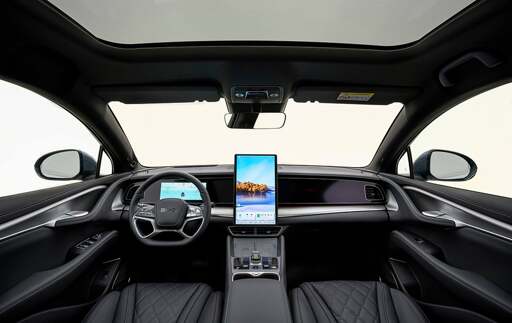
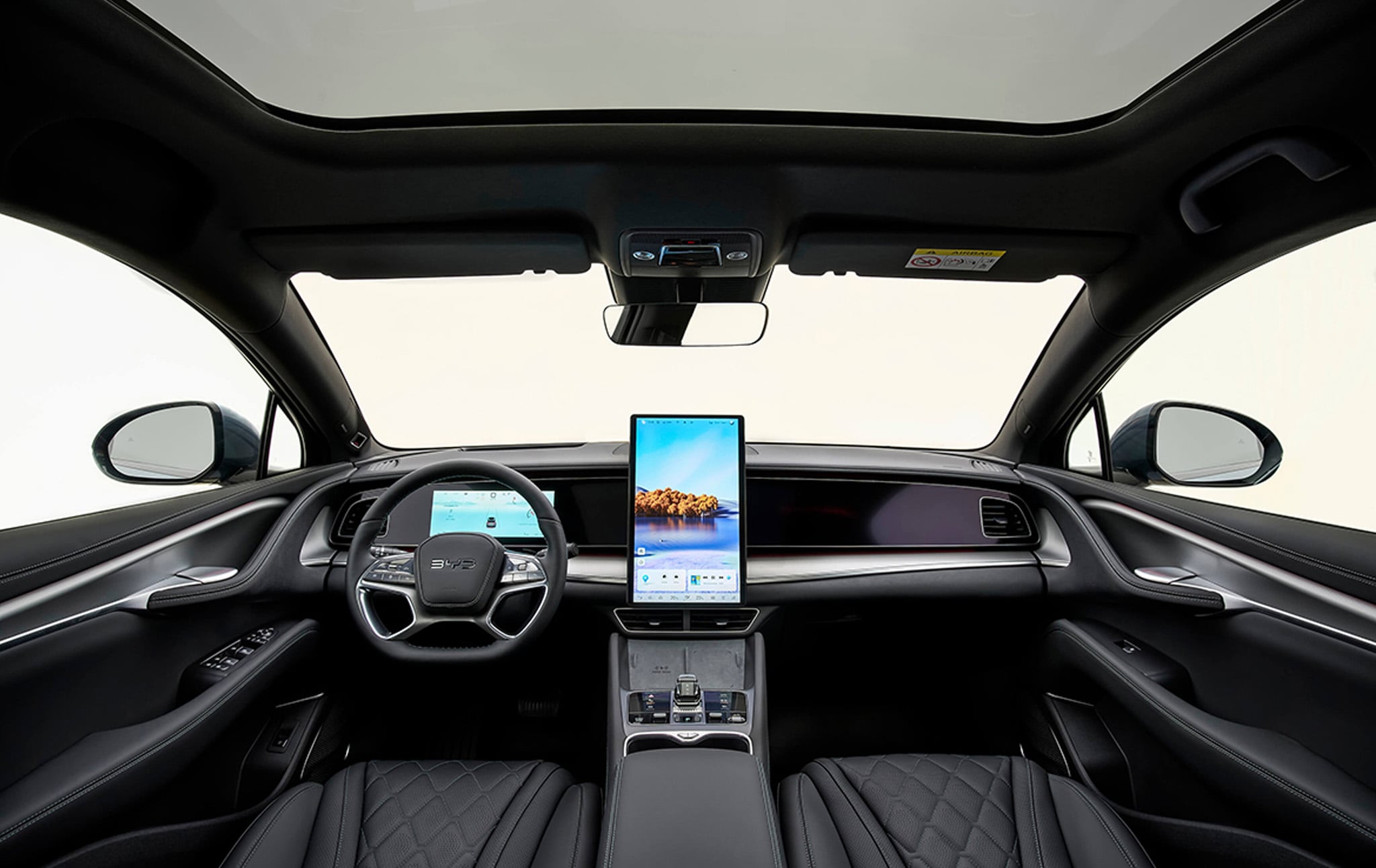
I took my first ride in a Chinese car recently. Not in the U.S., of course, since sky-high tariffs have made them almost impossible to import. I was visiting family in the U.K., and we rented a BYD Sealion SUV. And let me tell you: I saw immediately why American car companies are desperate to have these things kept out of this country. It was elegantly designed, incredibly comfortable, and a smooth ride.
From blog via This RSS Feed.

The funny part of all of this is that EVs don’t exist to save the environment, they exist to save car companies. Between the falling birth rates and the necessity to fix the car based infrastructure of cities, this “EV revolution” is a flash in the pan.
The amount of money and infrastructure that China dedicated to POVs will soon be an anchor around their neck as they come to reckon with the fallout of the “One Child” policy. They saw the US model as the method to reach global dominance, and went all in on a model that had alreasy reached the end of its relevance.
Yes and no. I’ve said for years that EVs exist to save car companies. They saw the writing on the wall and realized gas engines wouldn’t be viable forever. So I 100% agree with that.
However, a large part of why China’s EVs are so much cheaper is because they use different battery chemistry. American EVs went with lithium ion, because it has amazing energy density. But it is also prone to spontaneously exploding, the batteries age relatively quickly, and the construction requires massive amounts of a relatively rare metal. Something like a third of the cost of a new American EV is simply going towards the batteries. With a $30k car, that means ~$10k is simply going toward the batteries.
But China didn’t use Li+. They went with lithium iron phosphate (LFP) batteries instead. These batteries had much worse energy density originally, (only about half of Li+), but they were easier to manufacture, cheaper because they didn’t require as much lithium, not prone to exploding, and they don’t lose capacity as they age. And so China did the math, and realized that very few people drive more than like a hundred miles at a time, and decided to go with LFP batteries instead of Li+. They were willing to take the reduction in range in return for a much safer, easier, cheaper battery.
And then something interesting happened. As Chinese manufacturers began using LFP batteries, the technology improved. A lot. So now, LFP batteries are closer to 90% of the energy density of Li+ batteries, and they still have none of the drawbacks that Li+ batteries do. If a Li+ EV gets 300 miles to the charge, a comparable LFP battery may get ~270 miles. And since they don’t quickly lose capacity as they age, they actually end up overtaking Li+ batteries after two or three years of regular use. And since those Chinese EVs aren’t pumping tons of lithium into their batteries, they’re able to keep their costs relatively low in comparison to the much more expensive Li+ batteries that American manufacturers have used.
All of this is to say that the battery advances alone will likely be worth the cost. China is quickly shifting towards solar, and batteries are a huge part of that. By adapting LFP technology into their solar systems, they could easily hit 100% renewable energy usage overnight, at a fraction of the cost (and risk) of using Li+ battery banks.
It’s all about the “national car manufacturers profit security”. Nothing more, nothing less.
Point: potential security risks identified
Counterpoint: cheaper
You see how these things don’t really intersect, right?
Thankfully in America we have
Point: potential security risks identified while extremely expensive!
Maybe make regulations to limit the degree to which any car sold can spy on citizens? Nah, let’s limit competition so U.S. companies can keep making huge profits from inferior cars that still spy on everyone with no need to up their game.
For real. Every. Damn. Time.
Like if you want privacy or control of your car in the US you have to buy cars slowly becoming antiques or rip and replace a bunch of electronics not built to be maintanced at all. Doesn’t matter the country of origin. I think I’d rather EU, Japanese, or South Korean spying at this point but what a hell of a choice…
I’ll stick with Hyundai for now but if BYD becomes available in Canada, I wouldn’t mind giving it a try.
Hyundai/Kia have a major problem with the integrated charge control units that they’re basically refusing to provide a long-term solution for. If it fails in one car, they just replace it with an identical module and hope it doesn’t happen again. But the root cause has not been addressed.
i think they’ve offered a lifetime warranty in Germany on this item?
what cluster fick though
to be fair i have had the tbox fail in my BYD, can still drive it though, just lose in car maps ams connected services
“They”
the big “they”
Hate that shit in a headline.
I mean, Republicans just announced a bill completely blocking Chinese EVs from being sold in the US. Sponsored by a Car Dealership owning senator.
Read the article and see what Ro Khanna did.
I’ve been in many a Chinese Didi. Much like the cheaper Teslas the hardware in these cars is exceptional for the price, but nothing else about it really stands up past the first glance.
Software is distracting and UI is terrible. I’m sure privacy is nonexistent which is scary when you consider the car can see and hear everything you do and know everywhere you go.
Would I buy one? No. But I welcome more competition in the EV space, and something at an introductory price point that may get some skeptics to try something new.
Privacy is also nonexistent on all other car brands. The best thing to do is probably to disable the car modem. They might still collect information, but will be unable to transmit it.
Funny how legislators are scared of Chinese cars crossing the Mexican border
Lemme guess “because they’re better than American cars”
And exponentially more affordable.
Stern says her first reaction to driving the car was “holy crap,” and she “I fell for the SU7 Max inside and out, and now I’m left wanting what I can’t have.” She was impressed with the way its infotainment system integrated with a phone, the between-seat minifridge, the karaoke system, the walkie-talkie system, the driver-assistance system, the range, and the comfort. “I fell in love with all things about this car, including its price tag,” she said, noting that it was a better experience than a similarly priced Tesla. The Xiaomi, she says, is not even in the same universe as American cars. “It’s like if Apple had actually built the long-rumored Apple Car and everything just… worked.” “I will wait for you, Xiaomi,” she concludes. “We shall be together again one day.” One is relieved the Journal took her car away before things between them got too physical.
And if Stern sounds like lovesickness may have compromised her judgment, consider this: the CEO of Ford himself drives one. "I don’t like talking about the competition so much,” he admitted to a podcaster, “but I drive the Xiaomi… I don’t want to give it up.” Noting that the car is “fantastic,” he told a company board member that the Chinese auto industry is an “existential threat.”
American manufacturers are terrified of the Chinese auto industry, because Chinese cars are good, and they’re cheap. Their executives admit as much, saying that “the arrival of affordable, high-tech Chinese cars could upend” the industry. So they’re trying to ensure not only that Chinese cars can’t be sold in the U.S., but that Americans will never even be exposed to one. A group of Congressional Democrats recently sent Donald Trump a letter pleading with him to ensure Chinese cars never enter the United States. Supposedly progressive Democratic congressman Ro Khanna has been particularly aggressive in pushing for new rules, claiming the cars “put Americans at risk.” “Chinese cars are a serious threat to America’s national security and Michigan’s economic security,” Senator Elissa Slotkin has said. Astonishingly, even though the Biden administration already “imposed sweeping regulations that effectively ban Chinese automakers from selling passenger vehicles in the United States,” lawmakers are now trying to ensure that people can’t even drive Chinese cars across the border to visit the United States. They apparently envision an absurd scenario where agents at the Mexico border inspect every car to ensure it’s not Chinese before it’s even allowed to drive on U.S. soil. One problem is that U.S. manufacturers have focused on (deadly, inefficient) large SUVs and trucks, and the average new car now costs around $50,000. Car prices hit a record last year, and American auto loan debt hit a record $1.68 trillion, leaving many Americans with “more and more of their paychecks eaten by their car payments.” There are almost no new cars for sale under $20,000. But Chinese cars can sell new for as little $8,000 in China itself, and China may well be able to offer cars in the U.S. close to $20,000 new—if it’s allowed to compete. That’s why the industry sees Chinese cars as an existential threat: they worry that consumers will prefer them, and so the power of the government must be used to ensure that consumers are forced against their will to buy more expensive, lower-quality cars, in order to prop up the U.S. automotive industry. (They’ll say that’s about Jobs, of course, but it’s also about profits.)…
But wait! There’s more! The article deserves a full read.
Here’s the thing, with some of the new tech they are mandated on putting it cars (look up DMS and the 2021 Infrastructure Act) I’m not sure we are going to be able to avoid being spied on so I don’t really care who gets to do it. At least the Chinese market isn’t going to send Trumps gestapo after me because I said I don’t like fascists. I don’t like the slave labor aspect of the Chinese productions for sure and would avoid that. But given the state of the American car market I don’t give car if it’s made and or subsidized in china. A 22k car that fully charges in 10 min sounds like a dream right about now. The quicker we get away from fossil fuels the better.
Yeah, before the orange bastard came back, I would have absolutely defended the choice to not allow import of Chinese EVs for specifically privacy concerns and the Chinese government having access to my location and habits. Now? Fuck it. I don’t even care anymore. I’m more concerned about the domestic threat to even give a shit.
2020 plain clothes federal agents kidnapping people to makeshift prisons and the none of that really being addressed should have been an ey opening for people to view their greatest threat being the government they live under. Same with the Snowden leaks and rather than that becoming illegal, much of of progressively becoming legal going forward. Maybe some even made retroactively legal
Amen brother.
At least the Chinese market isn’t going to send Trumps gestapo after me because I said I don’t like fascists.
You realize there are “Chinese police stations” within Canada, right?
What do they do?
https://en.wikipedia.org/wiki/Chinese_police_overseas_service_stations
“Chinese police overseas service stations garnered public attention after human rights group Safeguard Defenders published a report accusing the Chinese government of illegally using the stations to intimidate Chinese dissidents and criminal suspects abroad and to pressure them to return to China.”
the headlights can project movies
unironically yes. I saw a Sony? branded EV with a long thin screen on the front bumper playing Ghost of Yotai trailers.
Id rather be spied on by a country whose jurisdiction I am not within
That’s not only security concern but also labour abuse. BYD’s Hungary plant is just another case among many:
The BYD factory being built in Szeged, Hungary, is facing scrutiny after reports of EU labour laws being violated among the Chinese migrant workforce.
As the article says,
Asked what conditions are like inside the site, a colleague [Chinese migrant worker] replies: “Nothing out of the ordinary, when you’re a migrant worker.” His supervisors are very strict and living conditions are “quite harsh”, he says
There are also environmental and health risks, as the article says,
Some people in [the Hungarian city of] Szeged feel as if there are too many unanswered questions about how the factory operates. Many were also concerned about health risks.
“The first thing that comes to my mind is infrastructure changes; as far as to what extent environmental factors will be respected, how will this affect us?” Zita, 55, tells the Guardian on the main street. “As a resident of Szeged, I feel that there was not enough information.”
Not to forget social issues,
Questions remain about pressure on housing and the quality of accommodation for migrant workers. Workers in Szeged told CLW of multiple dormitory buildings on the BYD site, six of which were fully occupied with about 450 people each, with an additional 1,000 staff offsite, bringing the total number of workers to 4,000.
Some staff reported working seven days a week “for full monthly cycles except when heavy rain temporarily halted construction”.
As well as ‘debt bondage’,
Those recruited through subcontractors also told how they had to pay fees of between £860 and £2,100 for the job. Those hired directly by BYD paid no fees, it said.
“For workers coming from low-income regions in China, these fees may constitute a substantial debt bondage,” says CLW, which has called on Hungary to “strengthen inspections and enforce labour and migration laws” at the plant.
This is a tiny sample.
Hey scrotty, how come is it that in every article about China you sealion in to talk about worker abuse, yet I’ve never once seen you post anything about worker abuse in Canada or the US?
Could it be that you don’t actually give a fuck about worker abuse and you’re just a racist who hates Chinese people?
- Modern slavery in the United States https://www.walkfree.org/global-slavery-index/country-studies/united-states/
- UN expert sounds alarm over ‘contemporary forms of slavery’ in Canada https://news.un.org/en/story/2023/09/1140437
- Systemic racial discrimination via discriminatory funding causing “Millennium Scoop” class action certified; long-term reform negotiations ongoing. https://decisions.chrt-tcdp.gc.ca/chrt-tcdp/decisions/en/item/521231/index.do?iframe=true
- Crisis fueled by human trafficking linked to resource extraction “man camps”; systemic inaction continues. https://afn.ca/all-news/press-releases/assembly-of-first-nations-afn-releases-2025-progress-report-on-missing-and-murdered-indigenous-women-and-girls-mmiwg-calls-for-justice-highlighting-human-trafficking-crisis/#to-top
- Failure to legislate a human right to safe water and diversion of settlement funds from critical services. https://siksikanation.com/carney-government-reaches-new-low-on-first-nation-safe-drinking-water/
- Slavery charges against Canadian mining company settled on the sly https://theconversation.com/slavery-charges-against-canadian-mining-company-settled-on-the-sly-148605
I drive an MGS5 EV - MG is a British brand, but it’s manufactured by SAIC motors. Every bit a Chinese company. I traded a VW ID.4 for it . . and WHAT AN UPGRADE. Better across the board - faster charging, longer real world range, much, MUCH better software . . . all for 25% less than the ID.4.
Jim Farley is right to be terrified . . . Both the American and the German legacy car companies are screwed.
If modern cars weren’t filled with tracking and surveillance equipment that empowers a foreign, not so friendly, state, then it wouldn’t be such a concern.