The faculty voted Monday to require universal proctoring for all in-person examinations in response to mounting concerns over AI-assisted cheating and declining student reporting of Honor Code violations. The policy, which takes effect July 1, preserves the student-run Honor Committee system while requiring instructors to serve as witnesses.
This is all new to me and fascinating. If someone knows more, please correct me.
The way I understand it the system relies on students swearing on their honor not to cheat and then a system of self supervision (aka snitching). There is an honor committee that consists of students who make sure no one cheats, and who investigate cases where it is suspected. Additionally there seems to be a culture of snitching on each other, should anybody break code.
I guess this presupposes a culture of immens pressure and a zero sum game where collaboration between students is unthinkable because your peers are made out to be your direct competitors… sounds toxic as hell to me.
a culture of immense pressure and a zero sum game where collaboration between students is unthinkable
making sure your friends are working honestly doesn’t have to be competition. i don’t like the implication that collaboration has to be conspiring to cheat against some authoritarian figure, instead of making sure all of your friends succeed.
Alternately it shows that trust is earned and something people should aspire to. Teaching to do the right thing requires the ability to do the wrong thing. Being honorable is doing the right thing when nobody is watching. Other students keeping an eye on each other is closer to nobody watching.
It isn’t like people don’t cheat when there are a large number of safeguards in place, they are just more likely to be caught.
You’re right and it depends largely on the framing. In a different setting I’d probably be for such a system of trust, in an Ivy League school my cynical view of it just seems more realistic to me.
The people who are studying at Princeton get told they are supposed to be the better than the others, are under constant pressure to perform and in an overall highly competitive environment. This is not an environment that builds trust, in my experience it builds distrust between competitors.
Trust to me should ideally be fostered in a system that encourages a collaborative environment, in which the students don’t surveil each other, but work together to achieve their goal of learning.
get told they are supposed to be the better than the others
better than those not at Princeton, not better than others at Princeton nor to the point of sabotage. in fact anecdotally they get told that even though they were probably top of their high school class they would be average or even low-performing, and will have Princeton’s full support in managing the transition, especially the mental preparation for “mediocrity”


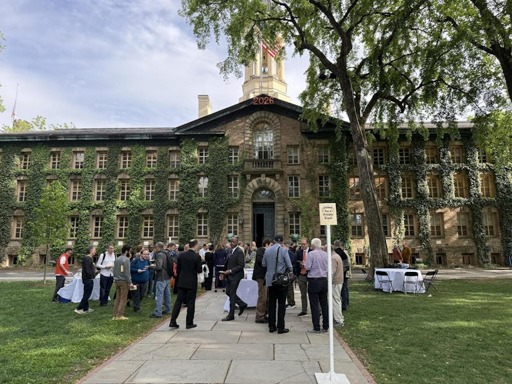
Short answer: yes!
This is all new to me and fascinating. If someone knows more, please correct me.
The way I understand it the system relies on students swearing on their honor not to cheat and then a system of self supervision (aka snitching). There is an honor committee that consists of students who make sure no one cheats, and who investigate cases where it is suspected. Additionally there seems to be a culture of snitching on each other, should anybody break code.
I guess this presupposes a culture of immens pressure and a zero sum game where collaboration between students is unthinkable because your peers are made out to be your direct competitors… sounds toxic as hell to me.
That seems like a ton of work to setup just to avoid having a teacher in the room…
making sure your friends are working honestly doesn’t have to be competition. i don’t like the implication that collaboration has to be conspiring to cheat against some authoritarian figure, instead of making sure all of your friends succeed.
Alternately it shows that trust is earned and something people should aspire to. Teaching to do the right thing requires the ability to do the wrong thing. Being honorable is doing the right thing when nobody is watching. Other students keeping an eye on each other is closer to nobody watching.
It isn’t like people don’t cheat when there are a large number of safeguards in place, they are just more likely to be caught.
You’re right and it depends largely on the framing. In a different setting I’d probably be for such a system of trust, in an Ivy League school my cynical view of it just seems more realistic to me.
The people who are studying at Princeton get told they are supposed to be the better than the others, are under constant pressure to perform and in an overall highly competitive environment. This is not an environment that builds trust, in my experience it builds distrust between competitors.
Trust to me should ideally be fostered in a system that encourages a collaborative environment, in which the students don’t surveil each other, but work together to achieve their goal of learning.
Indeed it’s about the framing, you call/think of it as “snitching” but to me it’s more “frowning upon being unfair/cheating and not letting it slip”
better than those not at Princeton, not better than others at Princeton nor to the point of sabotage. in fact anecdotally they get told that even though they were probably top of their high school class they would be average or even low-performing, and will have Princeton’s full support in managing the transition, especially the mental preparation for “mediocrity”
Exactly