

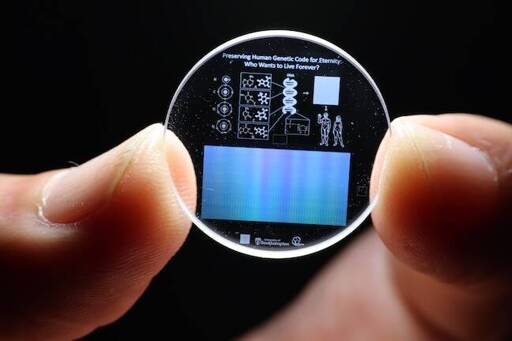
“the medium is silica crystal, similar to optical cable, it’s highly durable. It’s also capacious: The technology can store up to 360 TB of data on a 5-inch glass platter.”
“the medium is silica crystal, similar to optical cable, it’s highly durable. It’s also capacious: The technology can store up to 360 TB of data on a 5-inch glass platter.”
In case you missed it in the article, the transfer speeds are mentioned just two paragraphs prior to the one you cited:
Writing 360 TB at 4 MB/s will take over 1000 days, almost 3 years. Retrieving 360 TB at a rate of 30 MB/s is about 138 days. That capacity to bitrate ratio that is going to be really hard to use in a practical way, and it’ll be critical to get that speed up. Their target of 500 MB/s is still more than 8 days to read or write the data from one storage platter.
One counterpoint - even with a weak speed to capacity ratio it could be very useful to have a lot of storage for incremental backup solutions, where you have a small index to check what needs to be backed up, only need to write new/modified data, and when restoring you only need to read the indexes and the amount you’re actually restoring. This saves time writing the data and lets you keep access to historical versions.
There’s two caveats here, of course, assuming those are not rewritable. One, you need to be able to quickly seek to the latest index, which can’t reliably be at the start, and two, you need a format that works without rewriting any data, possibly with a footer (like tar or zip, forgot which one), which introduces extra complexity (though I foresee a potential trick where the previous index can leave an unallocated block of data to write the address of the next index, to be written later)
I was so blind sided by the fact that the tech isn’t for consumers that I forgot to mention the r/w speeds