- 11 Posts
- 20 Comments
Joined 2 years ago
Cake day: June 27th, 2024
You are not logged in. If you use a Fediverse account that is able to follow users, you can follow this user.


 0·15 days ago
That’s the confusion. I’m only talking about technology.
You’re contradicting yourself. Visa and co. don’t own technology. As you wrote, the implementation is left to banks and financial providers. You need to decide whether you want to discuss banks’ software implementation or the schemes designed by Visa and co.
That could be done by just making a new NFC wallet app
You can’t just build an app that uses NFC, like you build an app that uses a phone camera. You need special agreements with Apple (or Google) to access their NFC chip. Visa and co. don’t have such agreements which makes their schemes limited and unattractive compared to D€.

Visa and co. mostly don’t work on modern mobile phones.Never had a problem. Not sure what that means
It means that you can’t transmit card details to a terminal through NFC. In general, Apple, Google, Xiaomi and co. push their own payment solutions (Apple pay, Xiaomi pay) and block use of NFC by other parties.
The networks don’t do credit, or cash back rewards, points and the like. That’s not Visa and friends. Those are offered by the banks who back the accounts.
I was using a short-hand language with the assumption that You understand that we are not talking about technological implementation. So to unpack my statements for You: Visa and co. mandate that banks and other financial providers implement credit, cash back or customer protection. ECB in their proposal of D€ does not mandate such functionality. In fact, the current proposal prevents implementation of such features. In sum, D€ is a different financial scheme than credit card schemes by Visa and co. and D€ is the less costly (not mandatory implementation of credit, cash back etc.) and more privacy-oriented scheme of the two.
Debit cards don’t have those options and work exactly the same as far as the charge network is concerned.
You listed AmEx previously and AmEx doesn’t do debit cards. So I assumed You want to talk about credit card networks. Visa and Mastercard’s “debit” cards are deferred-debit cards. Specification of D€ is more akin to prepaid cards. So again, there are differences and I’m not sure what kind of “public network” You are arguing for.
In general, Visa and co. provide in parallel a large set of (often competing) financial transaction tools. Mostly, they haven’t invented anything, they just try to stay relevant in the rapidly evolving environment of financial-transaction providers. Especially, in case of digital wallets they are lagging behind. ECB can’t afford that.
What I mean is, one could just create a public charge card network that works the same way, with the same infrastructure that Visa, MasterCard, Discover, American Express, Diner’s Club, etc all use.
Visa and co. mostly don’t work on modern mobile phones. Digital euro strives to replace apple pay and google pay as well. Visa and co. also have lot of redundant functions like payment by credit, solvency assessment, cash back rewards, travel points and purchase protections. Digital euro doesn’t have that and as a consequence, it doesn’t need to intrude into customer’s privacy as much as credit card companies do. Nor does it incur the vast costs associated with credit recuperation on banks.
I’m not sure it’s enough of a reason to invent a whole new payment system.
The Euronews report lists the reasons:
Visa and Mastercard, both American, account for 61% of card payments in the eurozone and nearly all cross-border transactions, according to ECB data.
US President Donald Trump’s return to the White House and his hostile approach to both foreign policy and trade accelerated the debate, and at the European Council in mid-March, EU leaders set a deadline to approve the legislation before the end of 2026.
The ECB’s push to launch one is partly a response to the rise of privately issued stablecoins, which have steadily eaten into the payments landscape.
The message from Brussels and institutions across the continent is clear: Europe wants to control its own money.
ECB specifies the legal framework for digital euro which is tech-agnostic. The current plan is that it would be possible to use plastic card, web browser with username+password, smart watch, retail terminal or any future technology with digital euro.
Pavlos Marinakis, the deputy prime minister, clarified that the intention is not to abolish pseudonyms but to ensure that every profile corresponds to a real person.

There is probably a diplomatic protocol for these kind of situations. In the end, declining the opposing claim would amount to escalation. Conceding the claim would be sign of weakness. Your proposed solution would make fools of both parties. As already mentioned by EUobserver, there is a simple way out for Magyar by inviting Israeli president.
Also mentioned by EUobserver, a similar unconfirmed invitation claim was made previously by Netanyahu after call with Merz. So maybe that is something that Occam’s razor could be applied to.
What’s Your point? It’s the duty of independent media in democracies to uncover false information spread by public servants. EUobserver did well in this respect, don’t You think? Do You prefer that the false information spreads unchecked? If You prefer news without lying politicians, You should probably unsubscribe from all politics-heavy communities including c/europe
Invitation claim was made by Netayahu’s office and was never confirmed by Magyar.
For its part, Magyar’s party declined to confirm the invitation when emailed by EUobserver and by Israeli daily Haaretz on Thursday.
Magyar later said on Facebook only that he had spoken with Netanyahu, without mentioning any invitation.
Netanyahu’s office also declined to reply to Haaretz’s questions.
But Haaretz journalist David Issacharoff said on X that Netanyahu had a record of ICC-busting invitation bluffs. Source
Hungarian Prime Minister-elect Magyar stated his intention to maintain the close relationship between Hungary and Israel, and invited Prime Minister Netanyahu to participate in a ceremony commemorating the 70th anniversary of the Hungarian Uprising. Source
This is an official statement by Netanyahu’s office, which confirms my above-mentioned claim.
It is confirmed that Netanjahu claims that he has been invited by Magyar. This kind of reporting is correct, fair and transparent and should be supported in favor of this type of reporting
Domestic refineries were capable of covering about 70% of the bloc’s kerosene requirements Source
EU’s production is sufficient to cover the critical flight infrastructure. That’s also the reason why EU countries don’t stockpile jet fuel. This is just fear-mongering from airlines who fear lower profits during the coming vacation season due to rising fuel costs.
Like this: your name refered from your EU identity card now put into a conscription register meaning you can be called up at any time
How is the call-up supposed to work? Will the government publish the list of names and hope that these people will show up? National identity card is not mandatory and drivers licenses and passports don’t list a postal address. The government would have to access residence registers, but then people may just deregister their residence once they suspect that letters would be sent out.
Due to Schengen agreement a call-up would require a more complex solution. Such solution doesn’t currently exist. Though, some EU states started working on it.


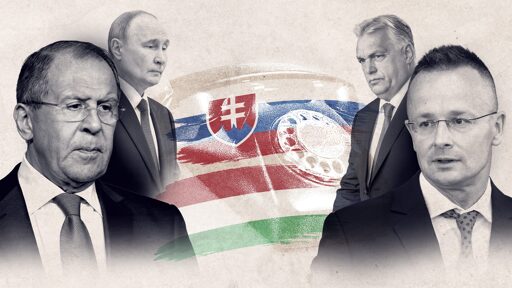
Youtube link with an excerpt from a call between Szijjarto and Lavrov.


ECB will not develop apps. ECB will offer an API and regulate and license the API access to providers like banks. The providers will then develop apps and other tools that will be accessible to users. They will have to use their own financial resources as stated in the report, which as usual won’t result in open access apps. Possibly, ECB API will be an open banking API.

When were those LNG contracts between Russia and European countries signed and what is their expiry date? That is the important information that is missing from the guardian report.
I don’t know how old your linked article is, as it’s behind a paywall, but according to different sources aluminum US tariffs on aluminum were already implemented or increased in June 2018.
Trump introduced 25% tarif in March 2025 which was doubled to 50% in June 2025. Another source
does that mean Chinese companies are copying US ones on this?
Trump administration imposed tariffs on EU steel in March 2025. Did China also impose tariffs on EU steel in the meantime? Or, why should chinese companies copy the american companies?
The report is a compendium of unsourced claims made by an executive of an US aluminium company Novelis. There is an older piece by FT with more serious sources. It has no mention of China. However, it says:
Washington has imposed 50 per cent tariffs on imports of steel and aluminium, but not on scrap. As a result, US smelters have increased purchases of European scrap to produce fresh metal and avoid tariffs.
😄 For the rest of the world it still makes more sense to avoid the depressing leading zero and to measure their bridges in meters.