The solar panel is easy, it’s the cable run that’s a real bitch
Yeah, sending it wirelessly would have massive loss, probably around 90%+
Are they really losses when the leaking, unfocused energy turns all buildings in a kilometer radius into microwave ovens? Just fill them up with popcorn packets and invite everyone over for movie night. We could watch one of the James Bond movies where the villain has an orbital deathray. I think there’s at least a couple of them.
I saw this documentary about a device that can concentrate solar energy, called a “Solex Agitator.” The project went sideways when this guy, who looked an awful lot like Christopher Lee, stole the prototype and tried to sell it to the highest bidder.
The British government somehow got involved and sent a spy to…
Wait… maybe that wasn’t a documentary.
It’s less about the loss and more about the space required for the receiver and the environmental hazard
That, and wiping off the caked dust.
LoL
That sounds like the least economical way possible to build out solar.
The article is actually discussing a feasibility study for the far future (25 years from now as per the article):
For the first time, researchers from King’s College London have assessed the possible impact that generating solar energy in space could have for Europe. They found it could cut energy battery storage needs by more than two-thirds.
The study, published in Joule, analysed the potential of a design by NASA for solar generation, which is planned to be in use by 2050. The findings show the design could also save money by reducing the cost of the whole power system in Europe by up to 15%, including energy generation, storage and network infrastructure costs – an estimated saving of 35.9 billion euros per year.
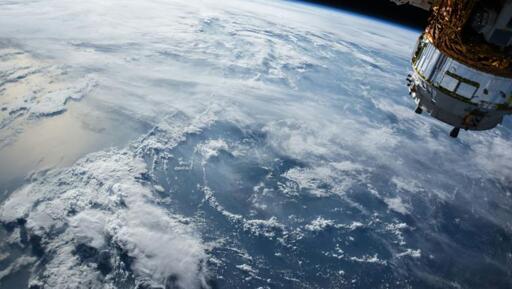
Space-based solar power generation involves in-space continuous collection of solar energy. This involves placing large solar panels on satellites in orbit, where they are exposed to much more sunlight and can continuously collect energy without being affected by clouds or the day-night cycle. This energy would then be transmitted to one or more stations on Earth. It is then converted to electricity and delivered to the energy grid or batteries for storage.
It’s a cool idea and I’d imagine we’d need an array spanning the globe rather than just over one continent
(25 years from now as per the article)
Anything 20 years or more away is a pipe dream that isn’t likely to happen anywhere close to speculation.
You could build a circle of satellites on the dawn dusk line, just have them do polar orbits. I think there’s such a thing as a solar stationary orbit.
The thing is, 25 years isn’t really that far in the future. Not when you count all the lead in time. Firstly you have to invent the microwave power transmission array, that’s probably going to take it a decade, and that’s been optimistic, then you’ve somehow got to arrange to launch hundreds of thousands, or even millions, of solar power satellites, then you have to figure out a way for the satellites to transmit the energy to the transmission array, and you have to build the receiving array on earth.
It took them 10 months just to build our companies new building, and it’s the most generic thing you’ve ever seen. How are they going to do all this in 25 years?
How’s that coming along?
https://eepower.com/news/pge-start-up-solaren-corp-plan-to-beam-solar-power-from-space/
Oh.
https://en.wikipedia.org/wiki/Solaren
" Solaren has since announced that the contract with PG&E has been forgone"
This is just Space Nuttery. Never, ever, EVER, going to work. Strictly sci-fi.
Some sci-fi comes true. Sadly usually only the dystopian ones.
Because they don’t need warp drive and tritanium…
Countries will do everything except build nuclear power plants ig.
Don’t feed the troll

Renewables are going so hard, it’s not even a competition anymore
solar panels on earth could reduce it 100%
So could a fucking Dyson sphere. This article is PopMech-tier speculative trash. A flying car in every driveway, any day now since the 1960s…
This energy would then be transmitted to one or more stations on Earth. It is then converted to electricity and delivered to the energy grid or batteries for storage.
How is the energy transmitted to Earth?
Yeah this article is severely lacking in any concrete details.
I’d also like to know how exactly it is that they plan to deploy massive arrays of solar panels to space. Most earth-based solar farms are huge and take up entire fields, some are a few kilometres across in size. That’s many orders of magnitude more massive than anything we’ve previously ever launched.
Plus whatever power transmission system they come up with would have to be powerful to be of any use but if it’s that powerful would present an active danger and would effectively constitute a space-based weapon system.
It’s a cool sci-fi idea but it is all pie in the sky.
Back of the napkin math:
Largest solar sail (much lighter than panels, but doesn’t produce electricity) 2000 sq meters
200w/sq meter
400kwp
Also iirc the space solar farms plans I’ve seen call for re radiating the energy back via microwaves to dedicated receiving towers on the ground
Yeah I’ve seen that. Microwave power beaming would work in theory it’s just electromagnetic radiation after all. But the vast majority of it is going to get absorbed by water molecules, because that’s what microwave radiation does, that’s why it cooks your food.
They’re probably going to bake a lot of seagulls as well.
All fun and games until a piece of space junk knocks into the satellite and you accidentally cut through the Dutch sea wall.
I think this was one of the possible disasters that could happen in Sim City 2000
Bzzzt
Fusion would be much more practical than beaming back power from space. I think the chance of seeing either of those by 2050 is about 0%.
Fusion does not exist and wouldn’t be in time if we started buildong commercial plants today. Low lead time is the only shot we have.
Space based solar has already been demonstrated, but will not provide substantial power since the receiver is basically a giant solar array and dead zone where life gets toasted.
Here’s the paper from NASA that this is based on.
https://ntrs.nasa.gov/api/citations/20230017756/downloads/ASCEND SBSP Final 05162024.pdf
NIMBYies in panic mode.
Or just provide more subsidies for solar panels at residential home roofs
that’s some easier said than done statement there
Solar energy gathered in space is less likely to be affected by cloud cover and is safe from natural disasters such as flooding and earthquakes
You don’t say. However I suspect that the chance of being hit by a micrometeorite is significantly higher.
Is this the microwave power from space idea again? /wcgw…