• 1 Post
  • 27 Comments
Joined 8 months ago
cake
Cake day: September 20th, 2025

help-circle
  • Got a few commands to try from a terminal:

    curl https://google.com/
    curl https://<your searxng fqdn>
    

    Try from the SearXNG terminal too.

    Lastly, in the container with Apache, there should be some log directory, maybe /var/log/apache2/? Try doing a tail -f /path/to/error.log. You could also do something like docker compose logs -f and (while tailing/looking at logs), try your search again.

    If all else fails, sudo journalctl -xef and/or sudo dmesg -wT may offer something interesting.


  • Maybe I ditch my plans and just establish a VLAN for IoT and guests.

    That’s a good starting point. Keep IoT away from your primary vlan (for all things holy don’t use VLAN ID 1). You can limit your outbound traffic for that vlan more easily if you want to cut your smart things off from the Internet.

    Guest WiFi/vlan can be just a straight shot to the internet, probably no need for visitors to get to your internal services.

    Eventually, you could add a DMZ where any Internet available systems like your VPN - with specific firewall rules only permitting VPN to specific locations inside your primary vlan.


  • it’s not security, just obscurity

    IIRC for my setup it’s a bit of both. My DNS API key is scoped to only handle the specific subdomain updates instead of my entire DNS account.

    I still use a wildcard for that subdomain for non-kubernetes systems, but the cert plugins for kubes is excellent at handling a LE cert per lan fqdn.

    You don’t need to register a local CA

    This was my biggest reason to move to Let’s Encrypt. I have a Hashicorp Vault instance in my homelab for secrets and I tried using it for an internal CA (like how the lab at work is set up), but trying to get on every device and add the full Vault chain to each individual system’s trust store was massive pain in the ass.


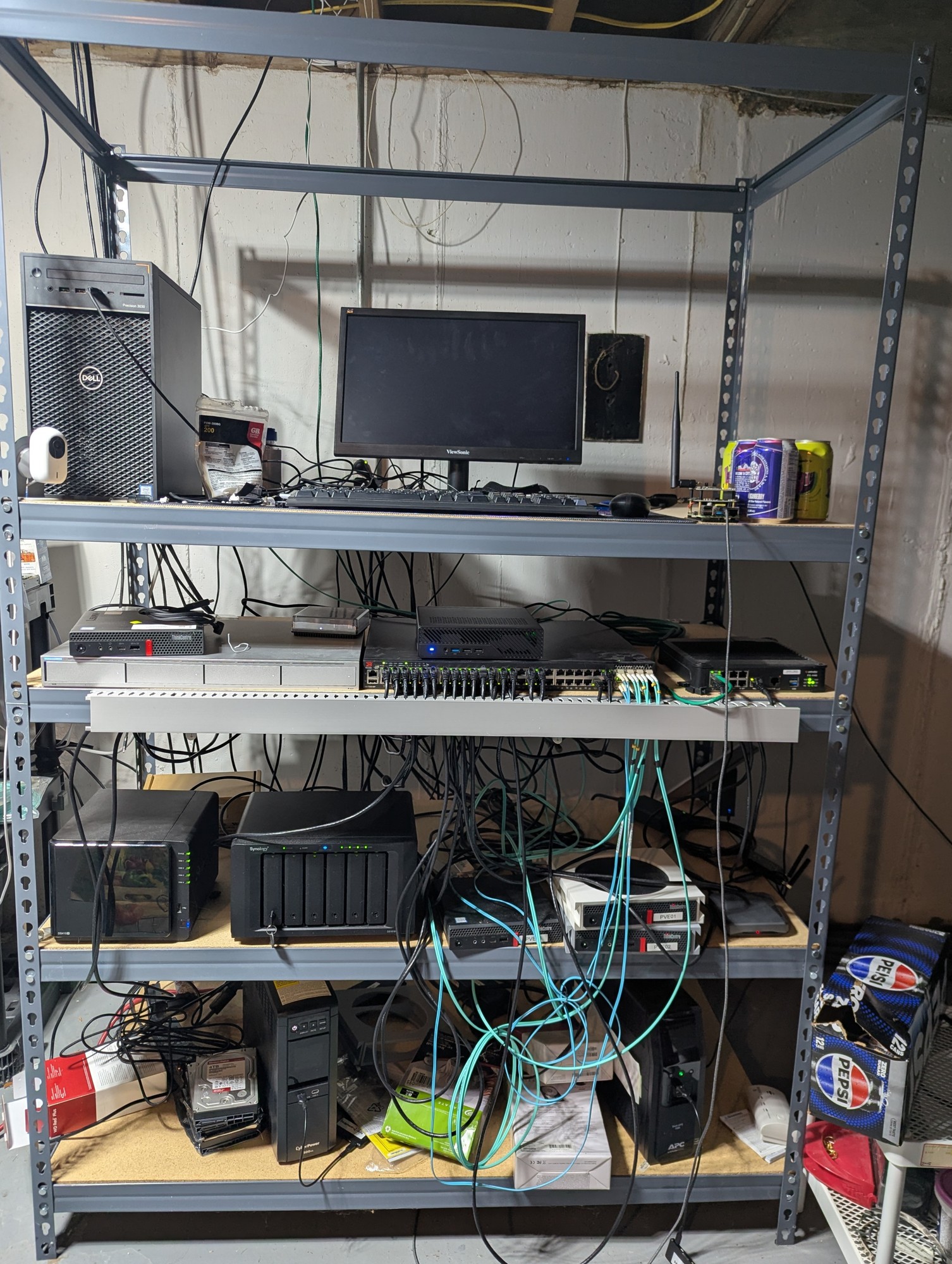
  • I do DNS challenges with let’s encrypt for either host fqnds (for my kubes cluster) or wildcard for the few other services.

    The trick is to do a subdomain off of a domain that you own (e.g. thing.lan.mydomain.com) this way, you can scope the DNS to only *.lan.mydomain.com if you’re conscious about scoped api security.

    Using let’s encrypt is nice because you can have a valid ssl chain that android, iOS, windows, and Linux all trust with their default trusts without having to do something with a custom CA (ask me how awful that process can be).


  • Yeah, in that case, I’d probably split my DNS duties. I started with internal resolution by having Pihole do hard coded DNS entries for internal systems, but my current setup seems to be much more resilient.

    I have two PowerDNS servers (main and replica) with recursors to Open DNS internet servers and resolvers for my lab network. It plays very nicely with Terraform or (crucially lately) Kubernetes.