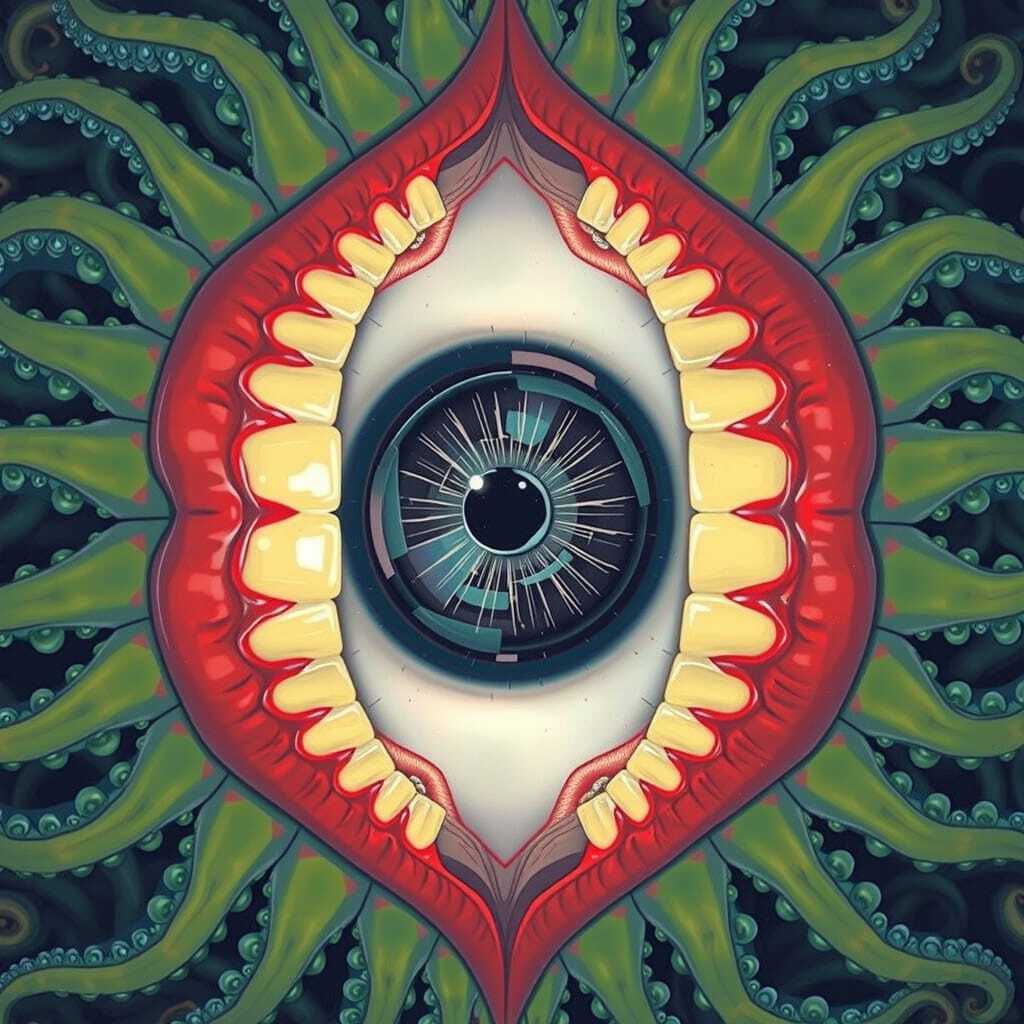
This alone should explain why history is full of catastrophes.
Almost every mistake in history can be traced back to somebody abandoning reality in favor of their own.
This is called Entropy
The specific type of entropy you’re describing is called “Social Entropy” but in all cases entropy is simply the fact that there are (usually) more disordered states for a system to be in than ordered ones. So if a system can undergo any sort of change, it is just generally more likely to become less-ordered than more-ordered.
You just discovered entropy!
I’m stuck in the definition of what is right and wrong?
This is why I hate linear planning. Pick an end goal and devise a process for approaching said goal. Correct the process as needed along the way.
Doesn’t fit in a gant chart, though, so my boss never listens.
Business, especially big business, hates the idea of adaptive strategy. There is no guarantee you will achieve the goal, and no clear cost to do so. Small businesses, or businesses willing to take risks, will factor that in and sometimes get ahead because of it.
Well, that’s just plain statistics of entropy: if there are two possible outcomes, there is a 95% chance of it being the wrong outcome. :D
Throw in some Sturgeon’s Law (90% of everything is shit), and we are all running to stand still.
Tangled Cord Theory
Entropy, like dropping a box of spoons. But in your life you can just shift your view of what’s right and wrong. People act like there’s one right path - go to school, get a job, get married, have kids,… There are a billion right paths and you can choose any of them. And if you choose not to decide…
You still have made a choice 🎶🎵
Things don’t actually go wrong they just don’t go right.
That’s why learning on mistakes is a thing
This is a legitimate way to analyze things, and you’re effectively analyzing the relative entropy of outcomes.
This is why for instance, strings will naturally tangle when exposed to random movement. There is a only a single configuration that is untangled and infinite tangled configurations, so given enough random energy will always tend towards a tangled outcome.
uhh i think that if the string is electrically charged, then the most straight-line, untangled state is the one with lowest potential energy, so that’s what the string will develop into, in the long term.
What about the N64 controllers when you and your buddies have been playing, correctly ordered p1-p4 to avoid tangles, and get called down to dinner. You come back and its just knots.
Quantum fairies or some shit idk
I can’t say I’ve ever had that happen playing either 4 player N64 or Gamecube, and I’ve played a lot of both.
That’s a little tiny Kirby in a captain falcon outfit that squeezes out of the rumble pack slot when you’re not looking, just to fuck up your shit while yelling ‘pack me lunch’.
A corollary to this thought is the so-called [persistent] “attacker’s advantage”: attackers need to do stuff just right only once to be successful, while the defender must do always, everything right to be successful at defending.
“Society is doomed for one very simple reason: it takes dozens of men working months with millions of dollars in material to build a building, but only one dumb-ass with a bomb to bring it down.” – Jason Pargin, John Dies at the End
But not all outcomes are equally likely. The probabilities is what matter in the end.
That’s true. I suppose we build our environments and systems to alter those probabilities
“for success to occur in a complex endeavor, all key factors must be present and work correctly. The endeavor does not succeed when even one essential element is missing, meaning there are many different ways to fail”