The announcement was light on details about both the system
So it is light on details but they KNOW it will save cash. Sure we won’t have to drop 300-500 bucks on pads and/or rotors every three years but we will have to replace the electric motor every five years to the tune of 4,000.
Idk it might use magnetic brake pads. I have used them in other fields & they are pretty nifty. The ones I used created eddy currents & had not mechanical wear. For my project the mechanical brake had a ~10 year lifespan while the magnetic brake could last ~50 years. Also the mag brake was only 30% more expensive but didn’t need maintenance & would be significantly cheaper if you took the lifespan of the project.
Can eddy current brakes bring something to a full stop? I thought the fin brakes in roller coasters are eddy current brakes, but isn’t there a physics limitation that prevents them from fully stopping the coaster?
In the real world yes-ish. In the case of a a roller coaster or car the eddy currents bring the speed to near 0 & the rolling friction brings it to a complete stop. The issue is an eddy current braking system can’t keep something at rest. That’s why the roller coaster has a physical brake to keep the ride in place when people are getting on. There are other types of magnetic brakes/ contactless brakes, I just don’t know much about them. My company used the eddy current brakes to limit fall speeds to a safe level if a specific part fell during an emergency.
Welcome to the world of mostly solid state systems. Turns out when friction is a solved problem there’s no need for cottage industries like brake pad and rotor production.
They can’t have perfect quality control for every part that leaves the manufacturer, especially considering the massive temperature fluctuations they might experience, humidity changes, road salt, and the fact its attached to something hitting bumps and potholes at 100+ km/h.
Redundancy, warnings, and inspections. You should have two different brake systems, traditionally the “parking brake” is a cable. Your hydraulic brakes are two different systems, one for the front, one for the back - if one fails you should have the others (at least a few times until you lose all fluid - enough to stop once). Your brakes also are designed to make noise when the common wear parts get worn, and that is a good time for a tech to inspect the rest of the system.
When did seperate hydraulics start being common? Most of the vehicles ive worked on have one hydraulic system with a proportioning valve to control pressure, usually with more braking power going to the front.
Well every car has wheel bearings that experience all those same conditions and last hundreds of thousands of miles. Brake calipers can also stop functioning, rubber lines can plug up, people can never change their pads and rotors.
Wheel bearings are generally sealed and so last well. Brakes tend to be easier to access and so don’t last - but it doesn’t matter because they typically wear enough before salt/dirt gets them that they will be replaced as part of normal maintenance.


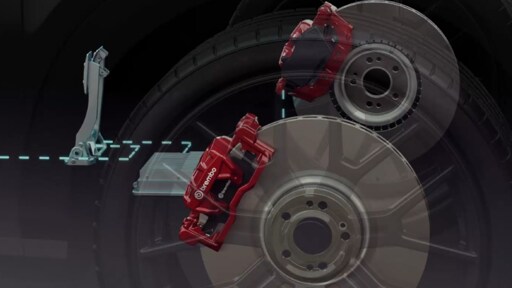
This is really cool……. BUT
I call BULLSHIT
So it is light on details but they KNOW it will save cash. Sure we won’t have to drop 300-500 bucks on pads and/or rotors every three years but we will have to replace the electric motor every five years to the tune of 4,000.
Idk it might use magnetic brake pads. I have used them in other fields & they are pretty nifty. The ones I used created eddy currents & had not mechanical wear. For my project the mechanical brake had a ~10 year lifespan while the magnetic brake could last ~50 years. Also the mag brake was only 30% more expensive but didn’t need maintenance & would be significantly cheaper if you took the lifespan of the project.
https://magnetictech.com/hysteresis-brakes/
Can eddy current brakes bring something to a full stop? I thought the fin brakes in roller coasters are eddy current brakes, but isn’t there a physics limitation that prevents them from fully stopping the coaster?
In the real world yes-ish. In the case of a a roller coaster or car the eddy currents bring the speed to near 0 & the rolling friction brings it to a complete stop. The issue is an eddy current braking system can’t keep something at rest. That’s why the roller coaster has a physical brake to keep the ride in place when people are getting on. There are other types of magnetic brakes/ contactless brakes, I just don’t know much about them. My company used the eddy current brakes to limit fall speeds to a safe level if a specific part fell during an emergency.
They’re used for some trains now, though I think that a lot of them have since switched to rheostat or regenerative braking instead.
There is no such thing as maintenance free.
Welcome to the world of mostly solid state systems. Turns out when friction is a solved problem there’s no need for cottage industries like brake pad and rotor production.
Unless they deliberately put in a part designed to wear out in 5 years, there’s really nothing in an electric motor that would.
Bearings can sieze up, starting capacitors can go. A worn bearing can overheat the windings and cause damage.
Yes, but those are things that can be designed to last decades, at very little cost.
They can’t have perfect quality control for every part that leaves the manufacturer, especially considering the massive temperature fluctuations they might experience, humidity changes, road salt, and the fact its attached to something hitting bumps and potholes at 100+ km/h.
So… how do manufacturers of hydraulic brakes do this?? Or any other safety- critical part on a car?
They don’t. Parts like calipers failing and rotors warping is common.
Redundancy, warnings, and inspections. You should have two different brake systems, traditionally the “parking brake” is a cable. Your hydraulic brakes are two different systems, one for the front, one for the back - if one fails you should have the others (at least a few times until you lose all fluid - enough to stop once). Your brakes also are designed to make noise when the common wear parts get worn, and that is a good time for a tech to inspect the rest of the system.
When did seperate hydraulics start being common? Most of the vehicles ive worked on have one hydraulic system with a proportioning valve to control pressure, usually with more braking power going to the front.
1970s/early 80s. The master cylinder has two chambers, though they are connected.
Well every car has wheel bearings that experience all those same conditions and last hundreds of thousands of miles. Brake calipers can also stop functioning, rubber lines can plug up, people can never change their pads and rotors.
Wheel bearings are generally sealed and so last well. Brakes tend to be easier to access and so don’t last - but it doesn’t matter because they typically wear enough before salt/dirt gets them that they will be replaced as part of normal maintenance.
Car could get hit by a meteor or more likely a Space X fragment…
Subscription to the live cloud service that connects your pedal to your braking system