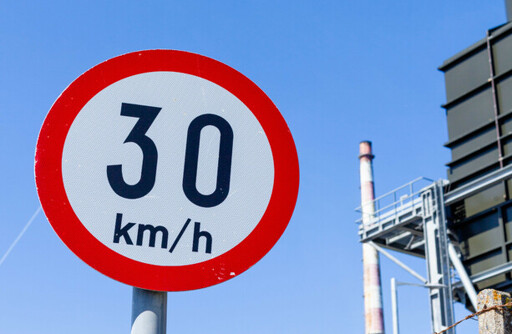
Many cities in Switzerland are implementing the same, but there is significant opposition from the rural areas. I hope we will arrive at 30km/h in all urban areas.
“We would like to set a speed limit in the cities.”
“Yo boss, the people from the countryside are protesting about your law in the cities.”What
How does no one in this thread realise that these “urban areas” speed limits also apply to all the tiny villages that are currently 50kph. In Europe any time you pass a village entry sign you are now in an urban area as far as speed limit goes. PS: I am for the 30kph limits, no qualm there.
I mean, that’s how I read it, too. It’s going to be the default for any urban area, cities of millions, towns of dozens.
But that doesn’t stop rural towns from increasing the speed limit by posting a 50kph sign, either where it is reasonable, or overall. When you enter any town/city-limits by car, you need to slow down to 30kph, unless there is a speed sign allowing for higher or lower speeds.
This is literally all a town needs to say “the 30kph limit is nice, but we don’t want that”:

It’s because many people, especially in the “car bad” crowd, don’t give a fuck about the rules of the road as long as they don’t see any personal benefit for themselves in others obeying them.
Weird take.
I’m in the “car bad” crowd (actually, it’s the "car useful, but should be mostly for emergency services, disabled people, deliveries, etc. including in rural areas for people who need it)
I care very much about the rules, and how it affects everyone. Rules make driving safer. Having 30km/hr default doesn’t prevent a town from putting up signs on certain roads to increase the limit…
This law is also good for town life, because side streets become more pleasant and safer by default.
Like, it’s not making the limit 30 km/hr on a rural highway…
I do realize that though.
kph
Are you from the USA or something? It’s km/h.
Could be people commuting
We mostly commute by train cause we have amazing public transportation, unfortunately they are working on cutting the 50% discount card for frequent train travelers because (no joke) too many people are using it (about 1/3 of the country). This will lead to public transport being more expensive than owning and commuting by car for many.
Sure, and for 90% of they distance they would still be unaffected. So there is still really no reason.
Duck them.
Hot take: Rural drivers shouldn’t get a say in how urban roads are designed
It’s not their city. They don’t live in it. They can stay in their town if they don’t like it
My thoughts exactly!
Is it not crazy to think that people in rural areas also enjoy the city and go to urban areas? It’s still the same country.
As visitors though. I don’t think their needs are irrelevant, but they shouldn’t carry as much weight as the daily users’
So the inhabitants of small towns driving daily to work to the next city get a say? I don’t know about Switzerland, but in my area these are a considerate amount, if not the majority of cars in smaller cities. Most don’t need a car living in the city, but you cannot commute into the city without in most cases.
Would you consider someone who uses the road daily as a daily user?
If so, re-reading my comment will provide a solution.
Not sure it’s visiting necessarily if it’s their nearest urban center, as then it would be their main source of a lot of stuff so it’s theirs too.
Why? The rural areas are by definition not urban.
They are.
For any built up area with appropriate signage, the urban speed limit gets applied.
Also a large chunk of the rural population is commuting by car, and has to change their (driving) habits, and changing habits takes effort.
Right, do if an area isn’t rural, it’s not considered rural.
It’s different in Europe. When they say “rural”, they mean any small town not adjacent to a city or other conurbation.
The density of small towns that have hundreds of years of history but are only 5-10km apart from the next 3-4 towns surrounding it are in a stark contrast to the 20-50km distances between North American towns. And rural farms are relatively rare. Farmers generally still live in the small town and then drive their tractor out to the fields.
Okay. How are they impacted by rules on urban development?
Speed limits on roads in built-up and urban areas can only be changed where a majority of the elected members in a local authority vote to do so.
This seems like the balanced approach. That would mean if there’s an arterial road where a higher speed limit still makes sense they can keep it while deciding to use the lower limit on other streets, right?
How is that more ecologically friendly? Driving 30kmh takes more fuel! And the cars will be running for longer time.
It does not. It would violate simple physics.
Technically it does. Engines are usually less optimized for driving 30 compared to 50, which causes them to use more fuel for the same distance.
But a slightly higher fuel consumption is easily offset by reduced noise and increased safety (for everyone).
You need close to three times (2.78) the energy for accelerating to 50 instead of 30.
If you have to brake, that energy gets converted to heat.
Rinse and repeat.
Especially in urban areas where there’s alot of acceleration/deceleration - or just acceleration with different algebraic signs - more speed means more fuel per distance.There are several graphs floating around showing the fuel consumption at 30 compared to 50 with different gears. It depends on your car and the gear used if 30 uses more fuel than 50. If your car uses more fuel for slower speeds and for such a common speed as 30, the manufacturer is an idiot. There are so many 30 zones in Europe that it really is not an argument against them that a car manufacturer can’t build proper cars.
And since we are also switching to electric cars, that problem will go away in the next decade or two.
My car is either lugging along in 2nd gear or doing like 3500 rpm in first at 30 kph, so mine wouldn’t be any quieter.
At that speed, most of the noise comes from the tyres. Slower = quieter.
Not with my exhaust
Username checks out
That’s just not correct
Which part? Can you be more specific as to what you mean?
Data on this is based on highway driving. Not city driving. Acceleration to 50 and then breaking again will be much less efficient than just driving a in 30
deleted by creator
Well, fuel consumption depends on the way you shift gears as well. But yes, it general it’s less.
My car legitimately takes less fuel at 90 than 30. It’s the whole accelerating to 90 part that takes significantly more fuel, but steady state, 90 is more efficient than 30.
This is all because of how internal combustion engines and transmissions with distinct gear ratios work. Even if you’re not moving, you’re going to use some amount of fuel to keep the engine running, right? The engine has a bunch of internal friction that needs to be overcome. That bare minimum is more significant at low speeds. And then to raise the engine speed, you’ll have to add a bit more fuel. When you shift up a gear, the engine speed goes down - and up to some speed, this is so significant that it affects fuel economy. Then once you get to higher speeds, the energy required to overcome wind resistance is the most important bit and that has a quadratic growth.
CVTs eliminate these sharp rises and drops in fuel consumption since they have no gears, but they have their own issues and even they don’t get rid of the baseline fuel consumption to keep the engine running. EVs eliminate all this nonsense altogether, which is one of the reasons why an EV is significantly more efficient in the city while an ICE is significantly more efficient on the highway (the other reasons are lack of idle and, of course, regen braking).
If you don’t want the issues of CVTs (which are essentially none if you lease a car and don’t give a fuck about it beyond the 3-5 years you use it and also aren’t an enthusiast), modern 8 and 9 speed transmissions are better than older transmissions here. They have more different speeds where the engine is in an optimal RPM range. You still don’t want to go TOO slow (think about it - fuel consumption of a car idling at standstill is essentially infinity liters per 100 km because you’re dividing X amount of liters by zero kilometers - as you approach zero speed, you approach infinite fuel consumption).
Realistically, the optimal speed for fuel economy with an internal combustion engine and no hybridization tech is probably somewhere between 40-80 km/h. The exact number depends on a bunch of factors.
Ok, I would have to drive in lower gear. That means using more power, higher RPM. Hence higher consumption.
Um, no not really. The gearbox only exists because the engine can only go so fast. The tyres can spin way faster than the engine. For example, you could take your foot entirely off the throttle and still drive 70 in sixth gear while the engine essentially idles. On the other side of the spectrum, the slowest the car can go, while having full contact with the gearbox would be 8 kmh, give or take. So, in the middle of the spectrum you could drive about 30kmh with 3rd gear fully clutched in and the engine on idle. Slower is also possible, naturally. Most cities choose 30 kilometres an hour because that’s when road deaths sharply increase. The reason for this is complex, but one of the main reasons is the field of view. The faster a car goes, the smaller your field of vision becomes. You can clearly see the pavement on your side, the other side of the road, and even some of the pavement of the opposite side. When driving 50, however, you can basically only see your own pavement and some of the opposite road. When doing 130 you can essentially only see your own lane well, with rudimentary details in the other adjacent lanes.
The gearbox only exists because the engine can only go so fast.
Oversimplified. The transmission exists because engines are optimally efficient at specific RPM ranges and the transmission works to keep the engine in those ranges. It/you (auto vs stick) will also downshift to provide more power at the cost of efficiency if hard acceleration is required.
When doing 130 you can essentially only see your own lane well, with rudimentary details in the other adjacent lanes
If you can’t see adjacent lanes, then you’re not scanning properly. This is called tunnel vision and where I live you’ll fail a road test for it. You’d also fail for going 130km/h.
Your error is thinking about “fuel”. It is the stated goal of the EU to push electronic cars and it totally doesn’t matter if some legacy technology is not working perfectly on safe roads.
I think the biggest and most important impact of this is safety actually. Survival chances from a 30km/h crash are significantly higher than at 50km/h. Crashes also simply happen much less because of a shorter stopping distance. Another thing is that at 30km/h you have much lower noise levels which is imo a public health issue that is very much undervalued. Also wear on the road surface decreases which makes for longer periods of time without construction.
Legacy technology :D
What if I tell you that noise pollution is a type of pollution? A lot of car noise is tyre noise which is proportional to speed. Also, tyre and brake particules are a type of pollution. They are created mostly from accelerating and braking.
Traffic flows smoother with a speed limit of 30, so travel times go down, cars run for less time.
I don’t think they mentioned ecological benefits, but accelerating and braking is a lot more inefficient than driving a constant speed. And since there’s no way you’ll be able to sustain any speed higher than 30 in most city areas in Ireland it makes sense.