Constructive dialogue can allow for new technology to succeed without stepping on too many toes. That’s the important role social media plays in society-impacting inventions and plans.
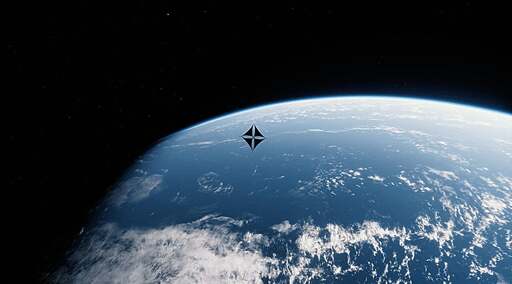
The Federal Communications Commission approved Reflect Orbital’s plan to launch Eärendil-1, an experimental satellite carrying an 18-meter-wide reflective surface. The mirror would redirect sunlight toward a targeted area after dark, producing a beam roughly five kilometers wide.
The July 9 authorization applies to one demonstration satellite, not the enormous constellation the California company eventually hopes to build. Reflect Orbital has described plans for more than 50,000 mirrors by 2035, creating what it calls “sunlight on demand.”
oh cool, more supervillains appropriating Tolkien
Servants of Morgoth.
Quite the opposite. The Star of Eärendil was a guardian of the Doors of Night, through which Morgoth was banished.
It was light from Eärendil, stored in the Phial of Galadirel, that was instrumental in defeating Shelob in Lord of the Rings.
Quite the opposite.
So the supervillains appropriating Tolkien are not the servants of Morgoth, or is one of us misunderstanding?
There are no “supervillains” and Morgoth is a fictional character, so yes, one of us is misunderstanding.
Clearly…
“Sunlight on demand” is an exaggeration. The plan is to create a 5km spot of 0.1 lux, which is a bit brighter than a full moon.
Every time I’ve seen this news posted (and I’ve seen it a lot over the past few days) everyone has leapt to some very extreme conclusions.
That would be multiplied by 50k according to their plan, wouldn’t it? That’s a lot of moons.
It would be completely impossible for them to all focus on the same spot, they’d be distributed around the world.
Also, that’s not been approved. This approval is for a single prototype.
I was not thinking about combining the beans, but about the surface that 50k of them would cover and the amount of additional light that would represent. I do hope it’s just some vaporware.
Why would they spread the light evenly? They’re planning on selling it. Someone would need to pay them to have a place illuminated, it’s not going to be randomly beamed all over.
Again you’re implying something I didn’t mean, but the point is that having 50k times the equivalent of the moon light intensity is expected to have a bad impact on the environment.
The amount of light pollution we have from cities is already more than necessary given that it covers makes most stars impossible to see.
I don’t think a large quantity of small fake moons is gonna help with that.
Last time a proposal like this made the rounds on the Internet stirring up consternation, the proposal was to use space mirrors to replace the street lighting for the Chinese city of Chengdu. It would have had no net effect on light pollution and would have reduced electricity consumption to boot.
Bear in mind, this mirror focuses its light on a specific 5km-diameter patch of land. It won’t be visible elsewhere.
The visibility doesn’t consider the massive glow that would appear to anyone seeing them outside their intended area of use due to reflections off dust and particles in the atmosphere. Light pollution goes far outside the area where cities are for the same reason, and having these in low earth orbit as a replacement for streetlights or as a spotlight would both have that happening.
Not really extreme. The whole concept is bonkers. What right has a company to destroy the night huge numbers of people and not mention wildlife.
It’s a 5km diameter target area. It’s not going to be shining on random patches of wilderness.
It’s a 50k constellation or some proportion that’s the problem. Also it’s who gets to approve such a monstrous plan? Surely not a national government as it is an international issue.
Also it’s who gets to approve such a monstrous plan?
The FCC. It’s in the title. There’s more detail in the article if you want.
Surely not a national government as it is an international issue.
Satellites have always been regulated by the nation they’re launched from or owned by. There are international treaties regulating some aspects of that, but treaties are implemented by their signatories - the national governments.
My point is why the FCC? It is a US government entity and as the current US government is pretty rabid, why should they be able to inflict this sort of thing on the the rest of the world? Maybe this will be a straw too many and force change. The whole Starlink debacle is bad enough but to add huge mirrors is just madness.
That’s just for one mirror, they’re saying they want fifty thousand up there.
But they only have approval for one.
Don’t worry it’s not going to happen. They’re just after investor money then they’ll vanish.
Even if they actually build this, a very small area of the planet is going to be imperceptibly brighter for 35 seconds.
People also said A.I. wouldn’t happen. I don’t trust them to not find some way to implement it in the worst possible way that impacts all of humanity. Like permanent daylight or something so there’s never time to sleep but now there’s 12 more hours in the day
They’re still limited by the laws of physics and geometry. Assuming perfect reflection and perfect alignment with the sun to the target destination you’re looking at something like 0.1 percent of the total brightness worth of energy being transmitted to the surface of the earth.
In other words, considerably dimmer than the moon. It’s not going to turn night to day, it’s not even going to turn at night to dusk, it will be the brightness of a crescent moon on an overcast night, assuming clear conditions. Covering an area of less than 3 km for a period of time of less than 20 minutes (increase the orbital altitude and you increase the amount of time that you can be over an area but you also decrease the brightness) I don’t think Mr Badger is really going to notice.
But as I said this is irrelevant because they know this which is why they’re not going to do it.
I agree with you that the current thing seems innocuous enough… but I think we’ve all been traumatised by recent events. Things have had a way of escalating extremely quickly, like: “oh yeah, we just approved 10,000 more satellites without even giving the general public a chance to react, so what?” Also, someone should coin that anime name.
Why is the FCC approving anything related to space?
Let’s beam down more heat! We totally need that on our rapidly heating planet.
And while we’re at it let’s just push even more shit above the earth because there’s no a lot of stuff up there already.
Well, technically there really isn’t much up there now.
I mean in low earth orbit it’s what, 99.999999999999999999999 % empty space? With the tiny fraction left being satellites.
That’s disingenuous though. You have to compute the orbital tube volume to account for the collision risks.
Yeah that’s true, calculating the actual collision risk is a whole different thing.
It was really just a joke, cause you know space is bigger and more empty than most people realize. Because what I said was “technically” true, if not super meaningful in any way.
That said, orbit isn’t too crowded yet, more is definitely going up, a lot more. Truth be told, 50 years from now, the number of satellites orbiting earth could easily be in the hundreds of thousands.
We’re at what, close to 20k right now?
Won’t take 50 years.
And not every orbit is equally useful. Near misses are getting more frequent, and it only takes 1 to start a chain reaction.
But a chain reaction in low earth orbit is generally short lived, atmospheric drag clears that up. A chain reaction in high earth orbit is exponentially less likely to happen. It’s the medium orbits to worry about, luckily they’re less popular for now, but as LEO fills up, they’ll likely start to be used more.
By that logic you wouldn’t mind if I loosed a bag of mosquitos in your house, would you?
Well let’s run with that. If you put a single mosquito in my house, I would have a higher ratio of mosquito to air than low earth orbit currently has in its ratio of satellites to empty space. (Seriously)
It’s easy to remove any number of mosquitos from your house, 1 person and a swatter can get it done. It’s incredibly expensive, laborious and dangers to remove LEO satellites. If something malfunctions then it’s essentially a stuck there until shot or nudged down.
Well, it wasn’t my metaphor, I’m not really defending it.
That said, you do seem to have missed the point of a metaphor. Nobody is arguing that mosquitos in a house are more of a problem than satellites… Comparing the two directly was not anyone’s intention.
Sure it wasn’t a great comparison in the first place. What I’m trying to communicate is that astronomers already have to deal with space trash as is, it’s a legitimate problem to their observations. Having a giant object to reflect potentially, and without constant upkeep certainly, become especially large space trash. Removing faulty equipment is already an inefficient expensive process. Everything becomes depreciatied at some point. I’m just hoping if this type of project comes to pass that it also has an plan in case of accident or insolvency.
I love this comment so much and I love “loosed” as a past tense verb even more.
Although this would also enable the alternate scenario of reducing incoming sunlight simply by turning them around. This project both doesn’t think far enough and much too far at the same time.
Also, we would need to finally abolish borders and create a world government for effective usage of such systems; this would enable the designation of areas where supercharged amounts of solar power are collected 24/7, while reducing solar input to areas experiencing heat waves.
It’ll look pretty cool burning up as it crashes…
producing a beam roughly five kilometers wide.
Oh, nice, now they won’t need these super expensive helicopters anymore to spot the fleeing
leftiststerrorists at night.A small beam a bit brighter than a full moon…
Sounds to me like they want to give a suntan to the coven of witches living in my forest grove.
I recall in Futurama this didn’t end well
also in INVINCIBLE.
Of course this will benefit the whole planet…
Oh not this again. I agree the it sets a stupid precedent but the act itself is irrelevant.
Far apart from the fact that it’s only going to be over any given area of the earth for about a minute tops, but also pointless because it’s only 18 m wide, so you won’t be paying for sunlight, you’ll be paying for a random spec in the sky to be switched on.
This is all a giant con where they’re trying to get a bunch of investment money from idiots that don’t know basic physics but do have a lot of money. I’d actually put a reasonable amount of money on this never actually launching.
orbiting debris will destroy the mirror so fast, plus solar winds.
Eärendil-1
I really doubt Tolkien would be in favour of this.
Spotlight, uh, moonlight, uh, eyesore get your fucking aim right 🎶
There needs to be an international campaign to harass all of these people until they leave that company. Shame them.
tech bros/hoes solving invented problems.
Bro, do you even diverge?
I’ll leave a relevant xkcd here https://what-if.xkcd.com/145/
We know this ain’t gonna happen (precisely because of a pesky thing called “laws of physics”), but it’s surely paving the way for similar deranged ideas such as “orbital data centers”, as this “Sun-as-a-Service” bullshittery moves the Overton window to where techbros want it to be, as well to (failed) attempts on pretending the laws of physics can be bent to capitalist interests.
Even sadder is seeing how other regulatory and space agencies worldwide (你好, 国家航天局! नमस्ते, अंतरिक्ष विभाग!) seem to be so quiet in this regard, as if all these deranged techbro ideas wouldn’t affect the skies over there…
It worked many times before - utterly deranged ideas drowned in borrowed money until it worked, or they just cashed out.
Look no further than LLMs.
One. Which is a venture grift anyway. They know they can’t approve space mirrors.