Then the price for fuel use would drop, but the cost for running large vehicles would increase dramatically to make up for the difference. Which will be passed on to consumers. Possible kill transit in some areas that already get questioned on cost. I’m more for spreading the cost over everyone using the road than giving more excuse for price increases on everything.
Shouldn’t the cost be spread to consumers though? Shouldn’t we try to encourage people purchasing products that created less damage to infrastructure? Buying local would be made cheaper, in comparison, and so would products that do a better job with shipping. That’s good, isn’t it?
Instead, we spread the cost evenly so there’s no reason to minimize this. That’s wasteful and antithetical to any argument that capitalism can effectively encourage beneficial behaviors. (I’m not a fan of capitalism, but as long as we’re stuck with it the things it does well should at least be used.)
A persistent myth that drivers pay for roads through gas taxes and tolls pervades all discussions on transportation funding, limiting the conversation not just about how we pay for transportation but also what our transportation system looks like.
You’re repeating the exact misconception TFA addresses. Your large vehicle fee is a vanishingly small proportion of upkeep.
Yeah, each individual car may not cause as much wear, but the sheer number of cars and light trucks causes most of the damage overall. I suppose it would still make sense to tax larger vehicles more heavily though, so I guess it still supports your conclusion, I just heard that the proportion of damage caused is way more than ~1% from just car traffic.
Doubt it. Stand on basically any street and count cars until you see a bus, big diesel truck, or a tractor-trailer come through, if you count less than 15000 cars, then the truck is doing more damage.
yea, that figure comes to my mind when it is said larger cars consume more gasoline, so they pay more gas taxes, therefore that compensate road damage, but the proportion is way off
on other note, i like to think 1000 light scratches do less damage to the skin than one very energetic
It’s not uncommon for roads to have load limits (ie 70% rated axle capacity) for certain times of the year, when the subgrade is more susceptible to damage. Like during spring frost thaw. A fully loaded vehicle would essentially sink breaking the asphalt bond and everything in the subgrade.


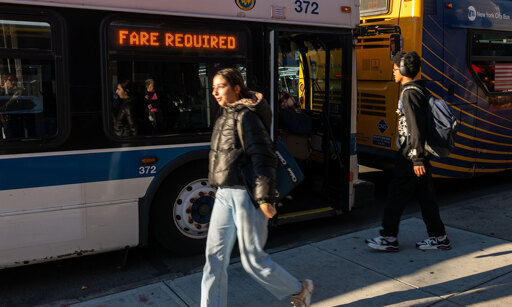
You should also know that most vehicles do little to no damage to the roadway. 99%+ of the damage comes from heavy truck and bus traffic.
Almost like we should pay vehicle registration based on gross weight and distance driven.
Then the price for fuel use would drop, but the cost for running large vehicles would increase dramatically to make up for the difference. Which will be passed on to consumers. Possible kill transit in some areas that already get questioned on cost. I’m more for spreading the cost over everyone using the road than giving more excuse for price increases on everything.
Shouldn’t the cost be spread to consumers though? Shouldn’t we try to encourage people purchasing products that created less damage to infrastructure? Buying local would be made cheaper, in comparison, and so would products that do a better job with shipping. That’s good, isn’t it?
Instead, we spread the cost evenly so there’s no reason to minimize this. That’s wasteful and antithetical to any argument that capitalism can effectively encourage beneficial behaviors. (I’m not a fan of capitalism, but as long as we’re stuck with it the things it does well should at least be used.)
But you pay more when you have a big car. In Germany anyway.
You’re repeating the exact misconception TFA addresses. Your large vehicle fee is a vanishingly small proportion of upkeep.
And yet, you pay more for a larger car. That’s all I said.
No wonder Michigan has the worst roads. The state has one of the highest truck weight limits in the country.
Damn, your mom needs to be carried by truck?
There is also a weather factor there. Freeze/thaw cycles and water intrusion are big factors in pothole creation.
Love to see a source on that as it’s counter to what I’ve heard.
Counter to what you’ve heard? Like it’s the light car traffic doing the damage?
Edit: To clarify- when I say damage I mean to the roadway surface and not the surrounding infrastructure.
maybe not the damage to the roads themself but they’re the one spreading cancer
Even the surrounding infrastructure.
Cars are designed to take the damage of a crash and dissipate the energy, transport trucks aren’t. Then there’s the momentum issue.
One truck crashing into a bridge is way more damage than a bunch of cars.
Yeah, each individual car may not cause as much wear, but the sheer number of cars and light trucks causes most of the damage overall. I suppose it would still make sense to tax larger vehicles more heavily though, so I guess it still supports your conclusion, I just heard that the proportion of damage caused is way more than ~1% from just car traffic.
Doubt it. Stand on basically any street and count cars until you see a bus, big diesel truck, or a tractor-trailer come through, if you count less than 15000 cars, then the truck is doing more damage.
It’s a well-known rule of matsci
https://en.wikipedia.org/wiki/Fourth_power_law
The tldr;
“Therefore, the resulting stress difference between truck and car is 15,000 to 1.”
yea, that figure comes to my mind when it is said larger cars consume more gasoline, so they pay more gas taxes, therefore that compensate road damage, but the proportion is way off
on other note, i like to think 1000 light scratches do less damage to the skin than one very energetic
It’s not uncommon for roads to have load limits (ie 70% rated axle capacity) for certain times of the year, when the subgrade is more susceptible to damage. Like during spring frost thaw. A fully loaded vehicle would essentially sink breaking the asphalt bond and everything in the subgrade.